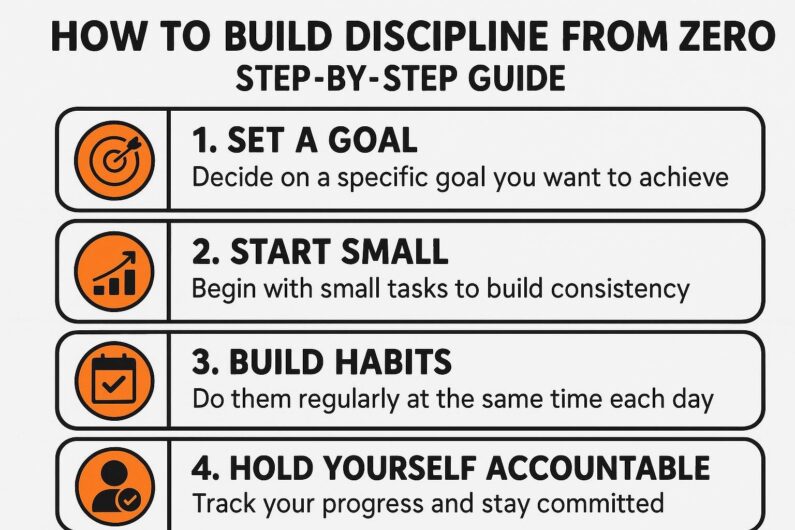
Discipline helps you achieve goals, improve habits, and create success. Some people think discipline is hard to start if you lack it. The good news is anyone can build discipline from zero. This guide shows clear, simple steps to develop discipline one small action at a time.
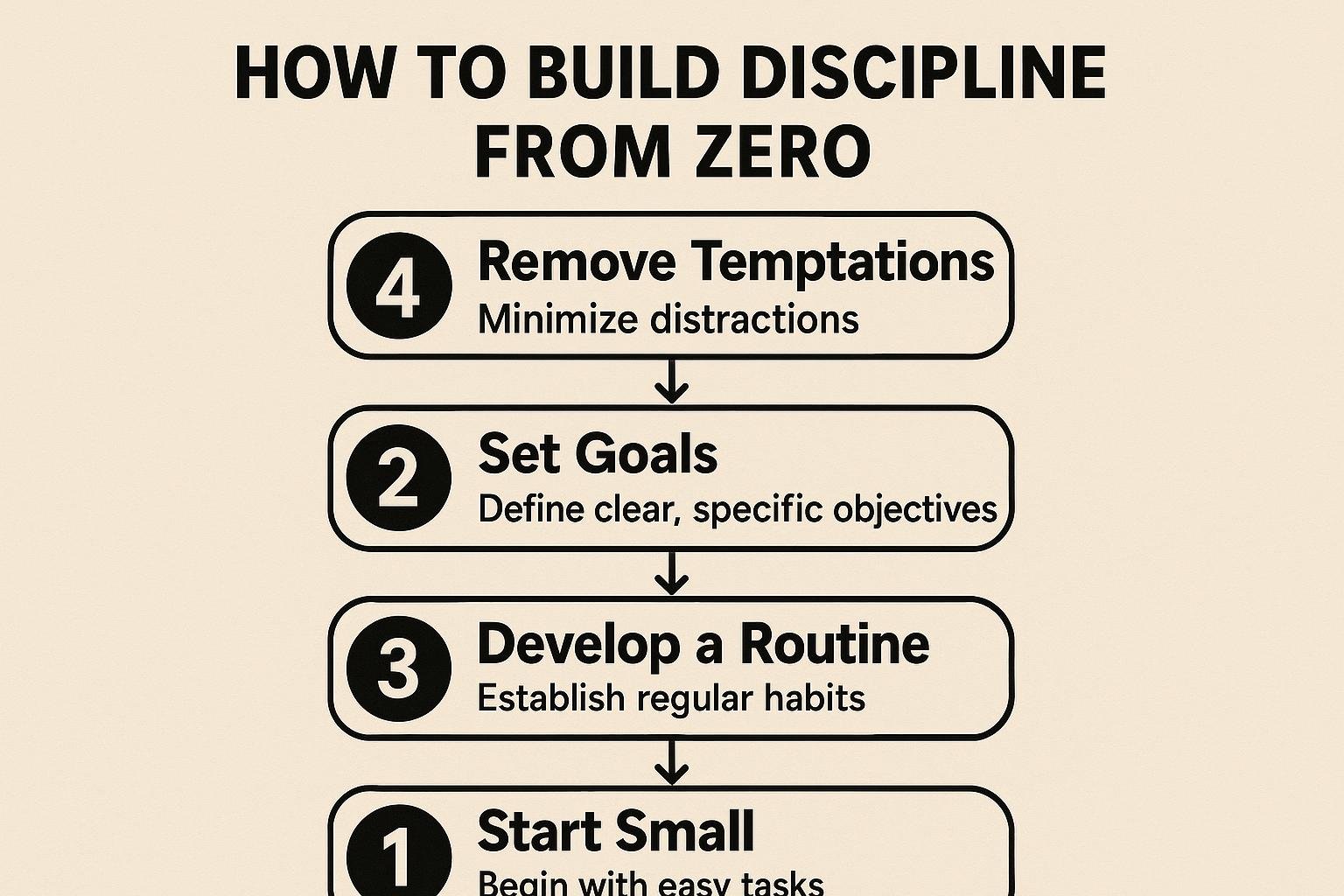
What Is Discipline?
Discipline means controlling your actions and choices. It means doing what you need to do, even when you don’t feel like it. Discipline is not about being harsh. It is about creating habits that support your goals. Discipline grows as you practice and repeat good actions.
Why Build Discipline?
Discipline helps you stay focused and reach your goals. Without discipline, it is easy to get distracted or quit tasks. Discipline creates order in your daily life, improves your work, and builds confidence. You can have more free time and less stress when you control your habits.
Step 1: Define Clear Goals
You need a reason to be disciplined. Set clear, simple goals. Write what you want to achieve. For example, “I want to run three times a week” or “I want to read one book per month.” Goals give you focus and motivation.
Use these tips:
– Make goals specific.
– Make goals measurable.
– Make goals realistic.
When your goals are clear, you can plan how to work towards them.
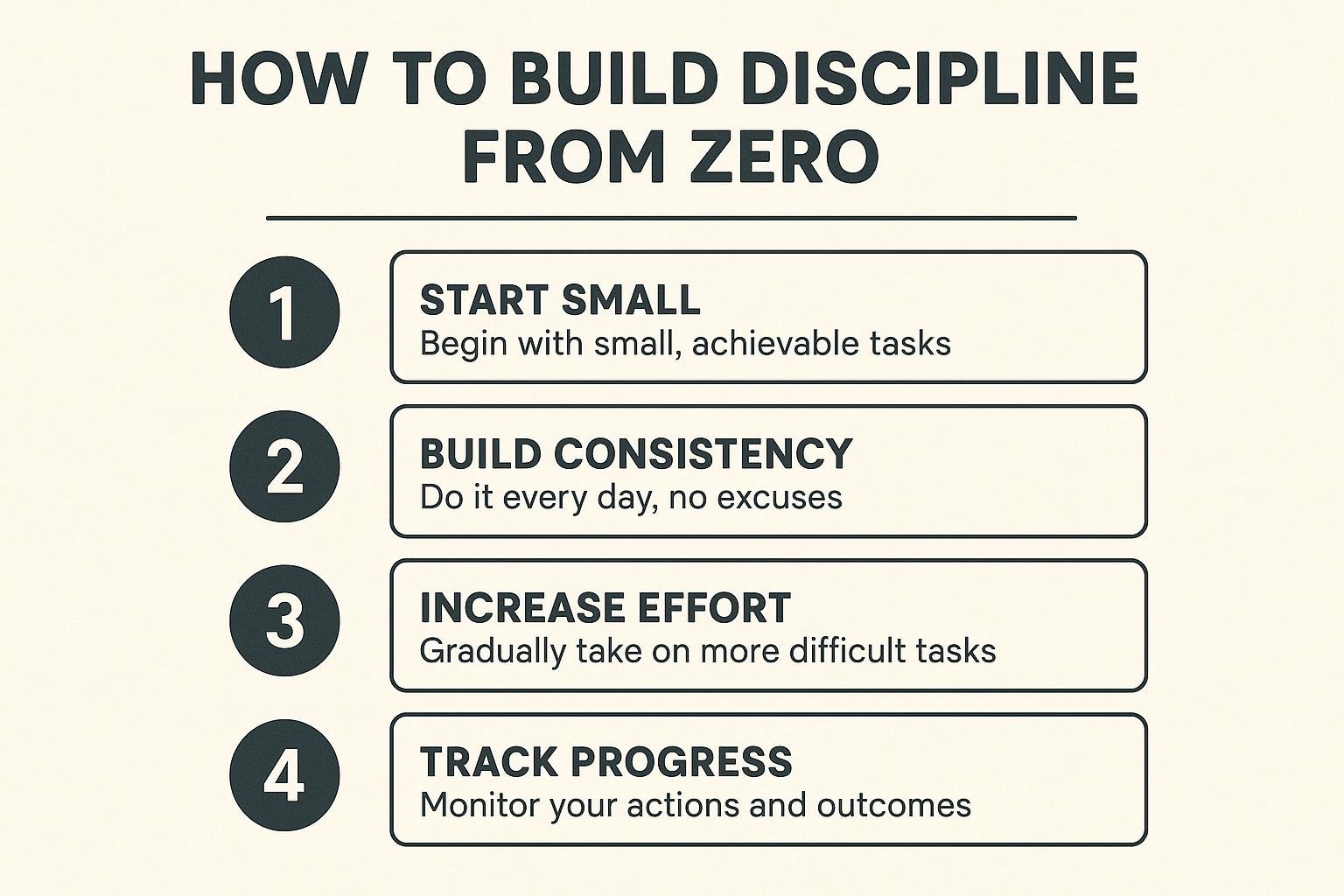
Step 2: Start Small
Change is easier if you start with small tasks. If your goal is big, break it into smaller steps. For example, if you want to eat healthier, start by adding one fruit a day. Small wins build confidence and create momentum.
Try this:
– Pick one small habit each week.
– Focus on doing it every day.
– Add a new habit only after the previous one sticks.
Small steps make discipline manageable.
Step 3: Create a Routine
Discipline grows when you follow a routine. Decide a time and place for your new habit. For example, if you want to exercise, choose mornings or evenings that fit your schedule. Repeat the habit daily or on specific days.
A routine helps your brain expect the task and makes it easier to do automatically. Use reminders like alarms or notes to stay on track.
Step 4: Remove Distractions
Distractions fight discipline. Identify what stops you from staying on task. It could be your phone, TV, or noisy environment. Take action to reduce distractions.
Some tips:
– Put your phone away during work or study.
– Use apps to block social media.
– Set a quiet place for focused work.
When distractions drop, your ability to focus and keep discipline improves.
Step 5: Use Rewards and Consequences
Your brain responds to rewards. Celebrate small successes to encourage discipline. For example, after sticking to a habit for one week, treat yourself to something you enjoy. Rewards make the process enjoyable.
At the same time, set consequences if you skip your tasks. This could be simply noting down a missed day or doing extra work. Consequences remind you to stay responsible.
Step 6: Track Your Progress
Keep a record of your daily discipline actions. You can use a journal, an app, or a calendar. Write down when you complete your task and how you feel. Seeing progress motivates you to continue.
Tracking shows patterns. You will notice days you struggle and prepare better for them.
Step 7: Stay Flexible and Patient
Discipline takes time. You will face challenges and slip-ups. Do not quit because of one mistake. Adjust your approach if needed. Maybe a habit moves to a better time or a goal changes slowly.
Patience means giving yourself time to grow discipline day by day. Keep going, even if progress is slow.
Step 8: Build Self-Awareness
Notice your thoughts and feelings when you try to practice discipline. Are you tired or distracted? Do you feel motivated or bored? Understanding your mind helps you manage emotions and avoid excuses.
Practice mindfulness by taking a few deep breaths before starting your task. This anchors your attention and reduces stress.
Step 9: Use Support Systems
Tell friends or family about your discipline goals. Support makes you accountable and encourages you. Find a buddy who also wants to build discipline. You can motivate each other and share tips.
Join groups or online communities focused on habits. Learning from others helps you stay inspired.
Step 10: Review and Adjust Regularly
Every week or month, review your discipline progress. Ask yourself:
– What worked well?
– What was hard?
– What can I change?
Use this insight to improve your routine and habits. Flexibility keeps discipline realistic and sustainable.
Common Challenges and How to Solve Them
Feeling Overwhelmed
Break big tasks into smaller parts. Focus on one small step at a time.
Lack of Motivation
Remember your reasons for the goal. Use rewards and support to boost energy.
Procrastination
Set strict start times and remove distractions. Use the “two-minute rule”: start a task for two minutes, often it continues naturally.
Low Energy
Get enough sleep, eat well, and exercise. Discipline is easier with good health.
Real-Life Examples
- Sarah wanted to write a book. She started by writing one paragraph daily. After a month, she had enough content for a chapter.
- Mark aimed to improve fitness. He began with five minutes of exercise daily before work. Gradually, he extended time and intensity.
- Linda wanted to save money. She tracked expenses in a notebook and cut small unnecessary purchases. This habit grew into a monthly saving plan.
Each person started with small, clear steps and built discipline over time.
Benefits of Building Discipline
- Better focus: You complete tasks faster.
- More confidence: You trust your ability to follow plans.
- Greater success: Achieve goals faster and often.
- Improved health: Healthy routines support well-being.
- Less stress: Order reduces chaos and worry.
Possible Downsides to Watch
- Rigid routine: Too strict plans can cause burnout.
- Self-criticism: Harsh discipline hurts motivation.
- Ignoring rest: Discipline should include breaks and fun.
Balance discipline with kindness towards yourself.
Conclusion
Building discipline from zero is a simple but powerful process. Start with clear goals. Take small steps. Create routines and remove distractions. Reward yourself and track progress. Stay patient, flexible, and aware. Get support and review your journey regularly. Discipline grows like a muscle—the more you practice, the stronger it becomes.
Start today by choosing one small habit to practice. Use this guide to keep going. With time, discipline will help you reach what matters most.
Take the first step now. Pick one simple goal and commit to it for one week. Your future self will thank you.